The Hurl

Maitiu Mág Tighearnán is a West Belfast dad who was in the right place on Monday night with the right object in his hand. He picked up a hurling stick and stopped something terrible, at risk to himself, while others waded in alongside him. He is, by any measure, a hero, and a hurl is not just a stick; it’s a location, and what it tells you about where you are is something the British media ran straight past, the way they run past most things about this place.
I’ve lived in Belfast most of my life; I’m writing this listening to helicopters overhead for a second day. I know these streets, and I know these communities, and I know, looking at the footage from Tuesday night, exactly what I’m looking at - and it isn’t race hatred. Or not primarily. So let’s talk about the men and boys on the Newtownards Road and across greater Belfast. The ones actually there, with the bottles and the masks. Who are they and why are they so ready?
They are the product of a peace process that was never finished. They grew up in communities where the peace walls never came down, because nobody could agree on what taking them down would mean and nobody wanted to spend the political capital finding out. They went to schools that were almost entirely segregated, lived in streets that were almost entirely segregated, and watched a political settlement get described as a success by people who didn’t live anywhere near them.
The peace dividend arrived unevenly. The Titanic Quarter got a makeover. Parts of north and east Belfast did not. The men on the streets Tuesday night are from some of the most deprived wards in the U.K and most of Western Europe, and they have watched that deprivation persist across their entire lives while being told the war is over and to be grateful.
Before the Troubles, there was something else being dismantled, more slowly, that never gets mentioned in the same breath. Harland and Wolff employed 35,000 people at its peak, almost entirely from these communities - the same streets, the same families, generation after generation. The linen mills. The rope works. The whole industrial ecosystem that gave working-class unionist Belfast not just wages but identity, status, a reason to be here and a pride in being here. It was gone before the peace process started, and nothing replaced it. The Titanic Quarter is now a museum, a hotel district and a screen-industry hub, home to the studios where Game of Thrones was filmed, built on the site of what those men’s grandfathers made with their hands. That is not nothing. It is, in fact, a lot - if you’re paying attention to what it says about who the city was rebuilt for and who it wasn’t.
The paramilitaries never left, and the organisations that ran these communities during the Troubles still run them, under various names, with various degrees of visibility. They are the social infrastructure in the absence of any other. They organise the bonfire culture (Eleventh Night is weeks away), which means the temperature is already raised, the paramilitary presence at its most visible, the assertion of territory at its most charged. The far right online ecosystem didn’t create Tuesday night- it supplied the narrative and lit the touch paper, but the crowd was already there, already primed, because it always is and the calendar makes it more so.
These young men are also genuinely frightened, and this is the thing the left finds hardest to say. Not of Sudanese refugees specifically. Of change they don’t understand and weren’t consulted about, in communities that already feel abandoned, in a society that has never reckoned with what they lost during and after the Troubles. And it doesn't just pass down culturally. There is a growing body of research suggesting that severe trauma can leave biological as well as psychological traces across generations. The hypervigilance, hair-trigger stress responses and sense of perpetual threat seen in communities that lived through the worst years of the conflict did not emerge from nowhere These young men are not reacting to Tuesday night, or tonight and so on. They are reacting to fifty years of Tuesday nights that their bodies remember even if their minds don’t.
None of that is an excuse. Understanding why the touch paper catches so easily is not the same as defending what happens when it does - the families on the street, the burning houses, the children in among it, is indefensible. But you cannot solve a problem you refuse to diagnose.
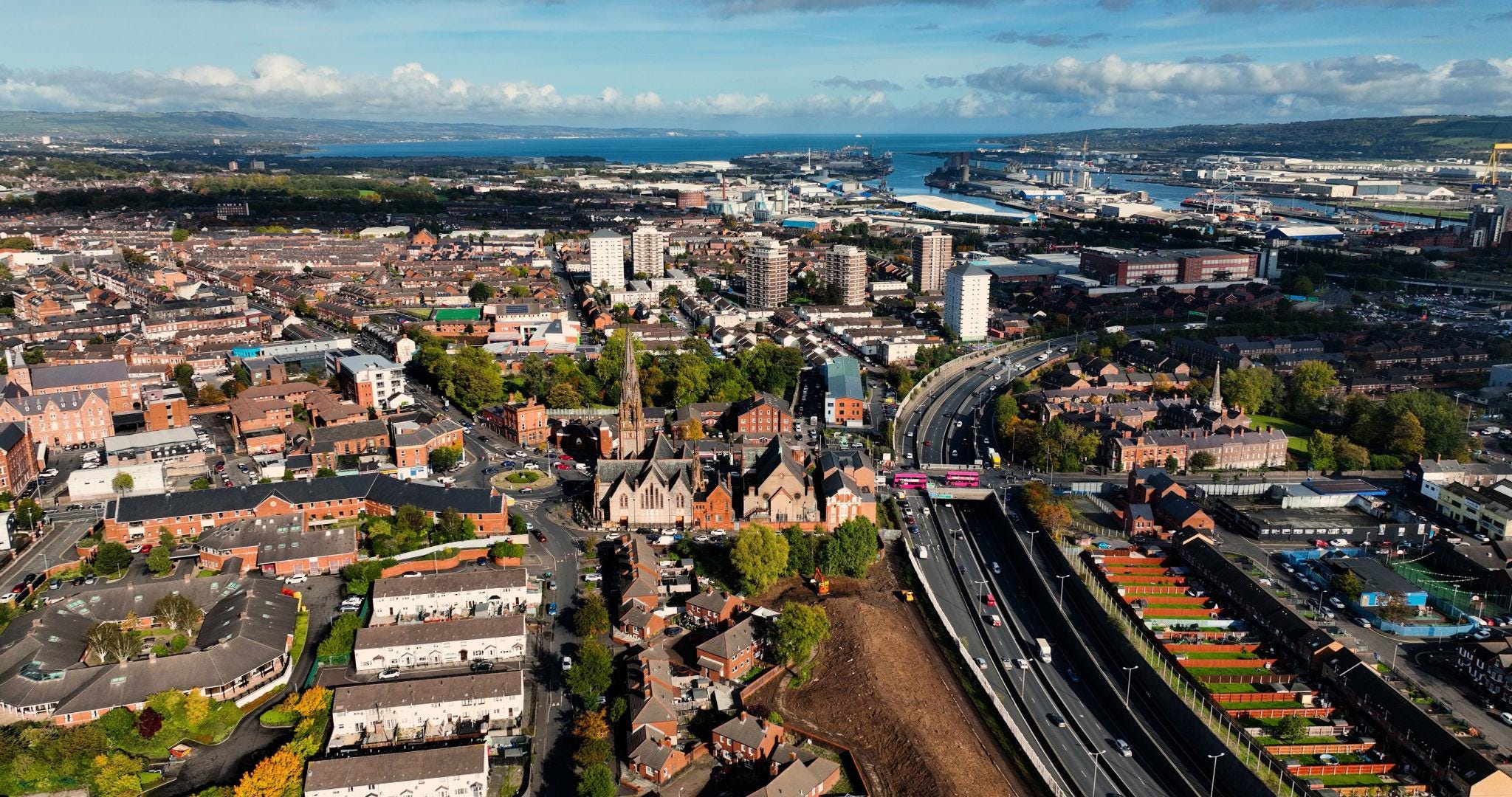
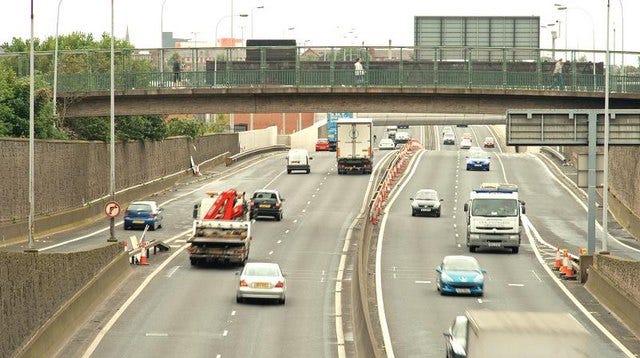
The physical landscape they grew up in was not an accident either. The peace walls, the interfaces, the Westlink that cut these communities off from the wider city- this is what researchers call military urbanism, the deliberate use of physical infrastructure to contain and segregate populations, mirroring precisely what was done to black communities in American cities through highway planning and redlining. The segregation of north and east Belfast was designed. It was built. It has been maintained. And it produces, reliably and predictably, exactly the conditions we are watching on our screens.
It is also worth saying, and this will be uncomfortable for some, that the shift in mood is not confined to Protestant working-class communities. On the Catholic side of the interfaces on Tuesday night, working-class men from firmly Republican areas were saying the same things about migration, quietly, in ways entirely absent from their community’s public representatives and media. The Green and Orange coming together narrative is being pushed harder from the Loyalist side, and Nationalist activists are wary of it for good strategic reasons, but the grumbling underneath it is real and it is on both sides of the peace wall. Sinn Féin and the SDLP do not speak for all of their communities on this, and pretending otherwise will not make it less true.

And Brexit is a live constitutional wound, not ancient history. The protocol, the Windsor Framework, the endless negotiation over what Northern Ireland actually is, all of it landed hardest on unionist working-class communities who voted to leave and found themselves in a different constitutional arrangement to the rest of the UK almost overnight. The sense of abandonment hasn’t gone away, and nobody in power has offered them an honest answer about where they stand.
Here is what almost nobody with a platform in this place is willing to say. A certain kind of liberal political culture in Northern Ireland has spent thirty years treating unionist working-class communities as either a punchline or a problem to be managed. The fuck-the-DUP aesthetic was fashionable for a long time. Mocking unionism, treating loyalist culture as inherently ridiculous, performing exasperation at people who voted the wrong way, all of it was socially acceptable in the circles that produce our commentariat and our political class, and the people on the receiving end noticed, the way people always notice when they are being condescended to.

Naomi Long, as Justice Minister, blamed ‘bad faith actors’. She is not wrong, but she is doing something very convenient, locating the entire cause of last night (and the foreseeable nights) outside Northern Ireland, outside her own government’s record, outside the thirty years of political choices that produced the conditions the online agitators walked into. The far right didn’t build the peace walls. They didn’t design the segregated housing. They didn’t underfund the communities. They didn’t negotiate the protocol. They arrived on Tuesday with a lighter and found that someone else had already laid the bonfire. And believe you me, those men are not on X waiting for their next instruction from Tommy Robinson or Nigel Farage.
The SDLP’s Colum Eastwood and Claire Hanna MP both said the right things in the wrong register — don’t share the footage, ignore the outside voices, English right-wing politicians shouldn’t use this. All true. All the kind of thing you say when you want to be seen responding without actually having to answer the harder question, which is what any of them intend to do about the communities that produced Tuesday night. John Hume would not have tweeted. He would have been on Kinnaird Avenue.
Calling everyone who raises an uncomfortable question a ‘far-right grifter’ is a closing move, not an argument. It hands every legitimate grievance directly to the people they claim to be fighting, and it protects a political and media class from having to account for what was and wasn’t built here in twenty-eight years of peace.
The whataboutery runs in every direction. Someone raises a question about the Home Office process or what open borders means in a place with a land border and an unresolved Brexit settlement, and the response is the Shankill Butchers, or male violence statistics, or a loyalist murder from 1973. The Belfast Telegraph ran a piece today doing exactly this: knife violence didn’t arrive in Belfast on a bus, Breen said, as if the question being asked was whether Northern Ireland had a peaceful past. It wasn’t. The Shankill Butchers were real and monstrous and from here, and that has nothing to do with whether the PSNI should have released a man who had just tried to kill someone. Every time a legitimate question gets batted away like this, someone in a deprived community concludes that nobody serious is going to answer it. They are right. The people doing the deflecting are doing the far right’s recruitment work, and they know it.
Large-scale migration is not a politically neutral policy. It has consequences for wages, housing and public services that land hardest on working-class communities who are then told that noticing is racist. In Northern Ireland that means a land border, the Common Travel Area, migration routes and entry arrangements never properly explained or legislated for, and communities that haven’t integrated with each other across a two-mile interface in a hundred years being asked to absorb rapid demographic change without support. Twenty-eight years in, we deserve better than riots and platitudes.
Maitiu picked up a hurl on Monday night and saved a man’s life, and other people ran toward the danger alongside him, and that is also Belfast, same streets, same place, and it doesn’t get enough credit for what it holds together on any given ordinary day.
The ones who are from here and know better need to think hard about what they’re protecting and what they’re handing away, and whose ammunition they’re loading.
The hurl was ours. The riots were not.
Very well written, Sara. There are so many appalling things going on in all this, we have to remember our common humanity, and also that the patronising attitudes of the great and the good towards working class unionist communities has been storing up trouble for many years. No excuses for that appalling rioting and those lads need long prison sentences. But let's be tough on the causes too. The daily output of various forms of sneering and chauvinism by the bien pensant against ordinary unionist people is not just wrong, it's playing with fire. And I write that as someone who is a Remainer and on the left of politics myself.
Brilliant, I particularly liked the line 'The people doing the deflecting are doing the far right’s recruitment work, and they know it' that is bang on the money, bravo Sara